Nature-based Home Solutions

Providing a one-stop shop for nature-based solutions to the most pressing challenges facing home landscapes.


Motivation for Nature-based Home Solutions (NBHS)

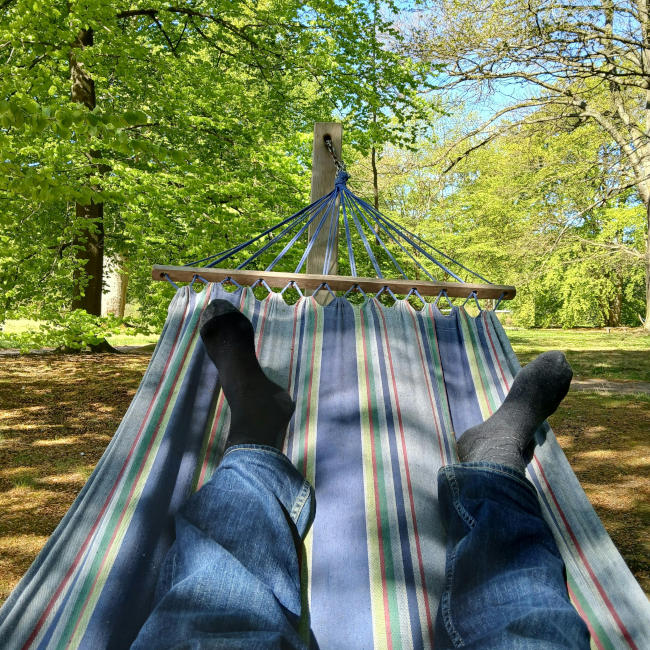
Alright, so maybe lounging in a hammock isn't a typical symbol for motivation, but the photo represents our central purpose: to improve human quality of life through cooperation with Nature. The Great Lakes region is experiencing increases in rainfall, extreme heat, and vector-borne diseases1 as well as rapid loss of biodiversity. NBHS offers an evidence-based starting point for homeowners looking to join the movement toward nature-based solutions, especially green stormwater infrastructure.

1Great Lakes Integrated Sciences and Assessments, “Climate Hazards and Impacts in the Great Lakes,” October 2023, PDF, accessed April 9, 2026, https://glisa.umich.edu/wp-content/uploads/2023/10/Climate-Hazards-Great_Lakes_GLISA_October_2023.pdf

Our Work

We unlock the power of geographic information systems (GIS) and deep ecological understanding to: improve water quality; control pests; produce food; reduced flood risk; generate livelihoods; and more.

As a revenue-generating not-for-profit, NBHS sells its services to avoid over-reliance on scarce external funding. Our work begins with a "home ecology audit" (inspired by "home energy audits") as a "one-stop shop" for identifying multi-benefit, low-cost, low-maintenance solutions that integrate seamlessly into a client's existing landscaping practices. Based on audit findings, we:

• Design and install low-maintenance green infrastructure (incl. bioswales, tree pits, rain gardens). • Assess the feasibility of a full suite of high-impact interventions and work with our partners to offer any solution a client may need.

Save Clients Money and Improve Quality of Life

In partnership with homeowners, NBHS identifies ways to save clients money, improve quality of life, liberate natural beauty, and increase readiness for an uncertain future. Our interventions:

• Offer health benefits, including: clean air and water, stress reduction, tick and mosquito control • Reduce costly basement flooding and foundation damage • Establish trees and shrubs that produce food year after year • Reduce area of lawn that requires mowing • Save on municipal stormwater infrastructure and treatment costs, which are passed on to residents through reduced tax burden and/or stormwater credits2 • Save on utility bills through: shading from trees, water conserving landscapes, rooftop solar power, and/or geothermal heating/cooling • Reduce icing of driveways and sidewalks • Provide due diligence for clients looking to buy a house or land so that hidden pitfalls can be identified before the buyer “bets the farm”

2City of Ann Arbor, “Stormwater Credits,” accessed April 17, 2026, https://www.a2gov.org/systems-planning/water-resources/stormwater/stormwater-credits/.

Generate Revenue for NBHS Operations

We are an impact-driven not-for-profit that sells our services in order to finance our own operations. We generate revenue through three primary avenues:

• Fee charged for our home ecology audit • Compensation for green infrastructure installation (i.e. planting trees/shrubs) • Earn commission through referrals to trusted professionals (e.g. tree services, solar installers, etc.) • As a not-for-profit, NBHS also accepts donations (not currently tax-deductible). All donations, along with 20% of total earnings, and all profits (i.e. revenue beyond reasonable compensation) are used to subsidize our services for low-income elderly and disabled individuals.

Create Nature-based Livelihoods

NBHS creates skilled, dignified, comfortable livelihoods that do not rely upon fickle external funding and will not be replaced by robots. Nature has been efficiently automating processes for billions of years. Working with (rather than against) these ecological processes can radically minimize landscaping costs, physical labor requirements, reliance on heavy equipment, and carbon emissions. The NBHS model offers very low barriers to entry for professionals going into the growing field of green infrastructure and ecological landscaping.3 In addition to our field-proven techniques, we train our specialists in state of the art analytical tools, such as GIS and LiDAR. Whether or not people who work with NBHS ultimately choose it as a career, they will develop a strong service ethic and become vastly more effective land stewards.

3U.S. Environmental Protection Agency, “Planting for the Future: Native Plants, Green Jobs, and Adaptation,” October 23, 2024, https://www.epa.gov/green-infrastructure/planting-future-native-plants-green-jobs-and-adaptation

How NBHS Benefits Your Home

Use advanced geospatial technology and deep understanding of ecological processes to...

I. Improve Water Quality and Reduce Flooding

Southeast Michigan is getting wetter, and that extra water often shows up in our streets, basements, and rivers. NBHS analyzes your property on the ground and from the sky to pinpoint high-impact locations for green infrastructure such as bioswales, rain gardens, permeable pavement, tree pits, etc.

II. Grow Food

Growing food at home optimizes freshness, saves money, improves nutrition, fosters a sense of place, builds community, and is simply a lot of fun. If clients choose edible perennial plants as part of their green infrastructure, NBHS assesses soil properties, sun angles, water flow, plant genetics, and more to ensure plant survival and drastically reduce long-term maintenance needs.

III. Control Disease-spreading Pests

Humans have long struggled to manage disease-spreading pests such as mosquitoes and ticks. This situation is further complicated by a warmer and wetter climate. NBHS brings integrated, ecological solutions to this inherently ecological challenge and increases Nature's benefits while minimizing its downsides.

IV. Mitigate Extreme Heat

As extreme summer heat events increase, so do the health risks from heat exposure. Michigan summers bring both heat and power outages, which is a potentially dangerous combination, especially among more vulnerable populations such as the low-income elderly. While not a fix-all, precisely-located trees and shrubs can help reduce these risks and save on summer cooling bills.

V. Support Native Biodiversity

Join a vibrant and growing community of people working ultra-locally to protect our imperiled natural wealth. NBHS supports native wildlife through: planting native species, controlling invasives, and capturing carbon in biomass. In addition to reducing stormwater runoff, the simple act of mowing less often within runoff channels can dramatically increase lightning bugs and critical pollinators such as bees and butterflies.

Other Promising Benefits

We continously integrate client feedback to expand our scientifically-rigorous and economically-sound service offerings. Our "home ecology audit" can offer an ideal starting point for: real estate due diligence, water quality compliance, firewise landscaping, winter ice reduction, solar panel installation, geothermal heating/cooling, LEED certified landscaping, and much more.

Scaling-up Positive Impact

Our work on individual properties already offers many benefits to the broader community, including: job creation, improved water quality, lowered disease risk, reduced stormwater management costs, and more. That said, NBHS can also work directly with local governments and watershed organizations to help them comply with regulations and plan nature-based solutions at a larger scale (e.g. "Sponge cities"). Jurisdictions can greatly increase their positive impacts by sharing our insights for direct use by local: engineers, architects, real estate developers, landscaping contractors, schools, churches, homeowners/HOAs, etc.

Below is a link to a powerful green infrastructure planning tool created by our partner organization, AdaptGeo. The interactive web map can be created for an entire jurisdiction, though the map below is only for a small sample of Ypsilanti, MI. Many additional map layers are possible, such as: soil types, storm drains, zoning, water table depth, FEMA flood risk, etc.


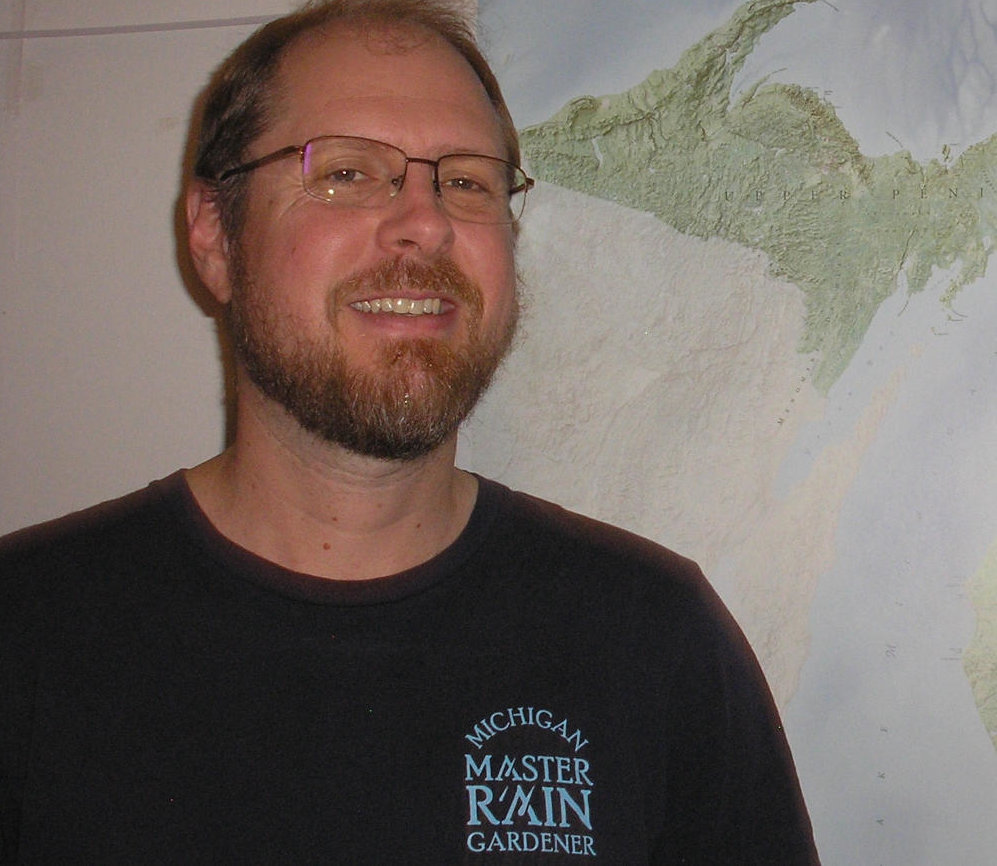
About Me

RobertTheShrubber

• Over 20 years of study and field-based experience in ecological planning and design

• Maintains over 50 edible perennials (mostly native) on our urban property in Ypsilanti

• Served over 2 years in the U.S. Peace Corps in Peru

• B.S. Biology/Ecology, M.S. Geographic Information Systems, M.Ag. Agriculture

• Certifications: Soil Erosion and Sedimentation Control (SESC) and Certified Storm Water Operator (CSWO)

Contact Us

Please reach out using the form below. We’ll get back to you as soon as possible.

You won't find us on social media.