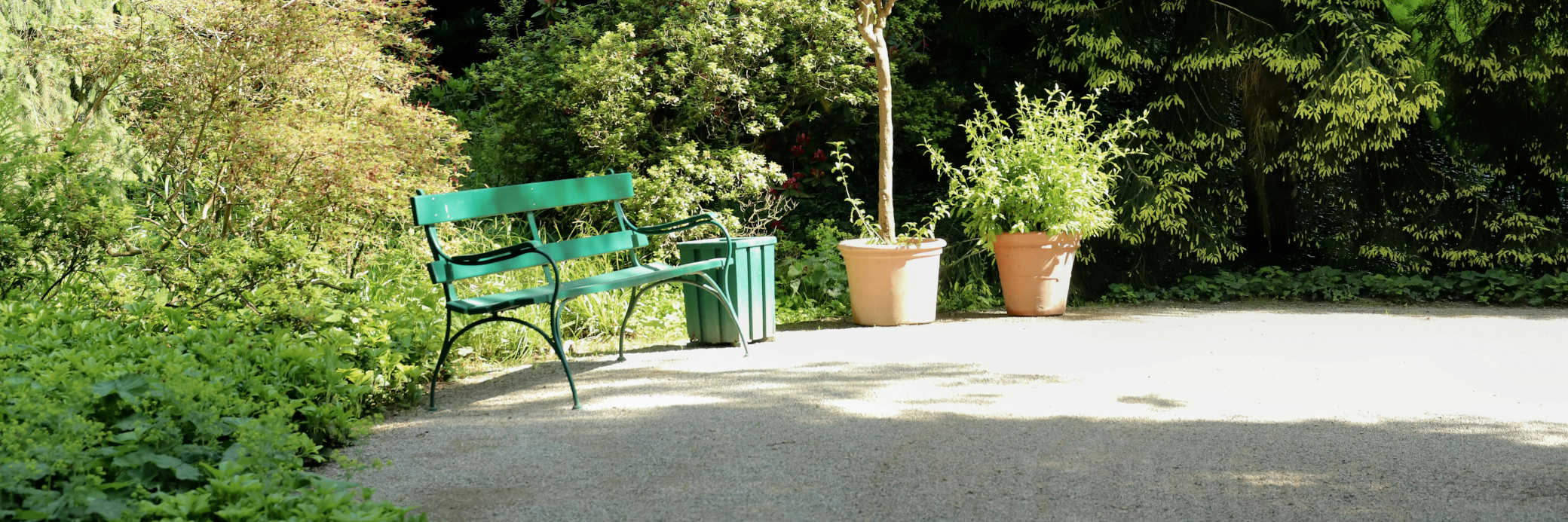
How NBHS Reduces Risk from Extreme Heat
• Plant woody vegetation to cool the surrounding area and capture carbon
• Precisely locate trees and shrubs to optimize shading and privacy
Success is monitored through tracking the total number of trees and shrubs planted and by conducting before and after surveys
of a client's outdoor comfort.
A Closer Look...
Winter Ice: While green stormwater infrastructure is typically most effective in warmer temperatures,26 carefully-designed
installations can reduce snow melt runoff and thereby reduce icy sidewalks and driveways. NBHS can use
high-resolution imagery to position green infrastructure downstream of concentrated snow melt and upstream of ice-prone
surfaces. Additionally, depaving and/or permeable paving can reduce surface icing and (depending on the product used) can
provide a much softer surface than concrete in the case of slips and falls.
As extreme heat events increase,18 so do the health risks that come along with them. In 2022, for example, a
summer heat wave in Europe caused over 60,000 heat-related deaths.19 Michigan summers bring both heat and power outages, which is a
potentially dangerous combination, especially among more vulnerable populations such as the low-income elderly. Though certainly not a
cure-all, carefully-located trees and shrubs reduce summer heat, lower cooling bills, and improve outdoor comfort through evapotranspiration and shading of heat-storing and
radiation-reflecting surfaces.20 NBHS experts use spatial analysis along with field-based observations and homeowner
input to optimize cooling effects through tree and shrub planting. Woody vegetation also helps mitigate climate change
through increased above and below-ground carbon storage. When appropriate planting locations and species are chosen, trees and
shrubs also reduce stormwater runoff, enhance privacy, support native biodiversity, and more.
18Great Lakes Integrated Sciences and Assessments, “Climate Hazards
and Impacts in the Great Lakes,” October 2023, PDF, accessed April 9, 2026,
https://glisa.umich.edu/wp-content/uploads/2023/10/Climate-Hazards-Great_Lakes_GLISA_October_2023.pdf
19Joan Ballester et al., “Heat-Related Mortality in Europe during the Summer of 2022,”
Nature Medicine 29, no. 7 (2023): 1857–1866, https://www.nature.com/articles/s41591-023-02419-z
20Haiwei Li, Yongling Zhao, Chenghao Wang, Diana Ürge-Vorsatz, Jan Carmeliet, and Ronita Bardhan,
“Cooling efficacy of trees across cities is determined by background climate, urban morphology, and tree trait,” Communications
Earth & Environment 5, no. 1 (2024): Article 754, https://doi.org/10.1038/s43247-024-01908-4